Client D
MenuTruth for a multi-market quick-service chain. Every kiosk store, every day: the menu a guest would actually see, checked against the agreed book, with a same-morning view of what is wrong and what is off on purpose.
The morning check, before the lunch queue
MenuTruth walks the live kiosk as a guest would, then tells the brand what needs a fix and what was switched off on purpose. The outcome figures below are how that shows up in the operation — not estate-wide store counts.
Menu accuracy used to depend on someone noticing
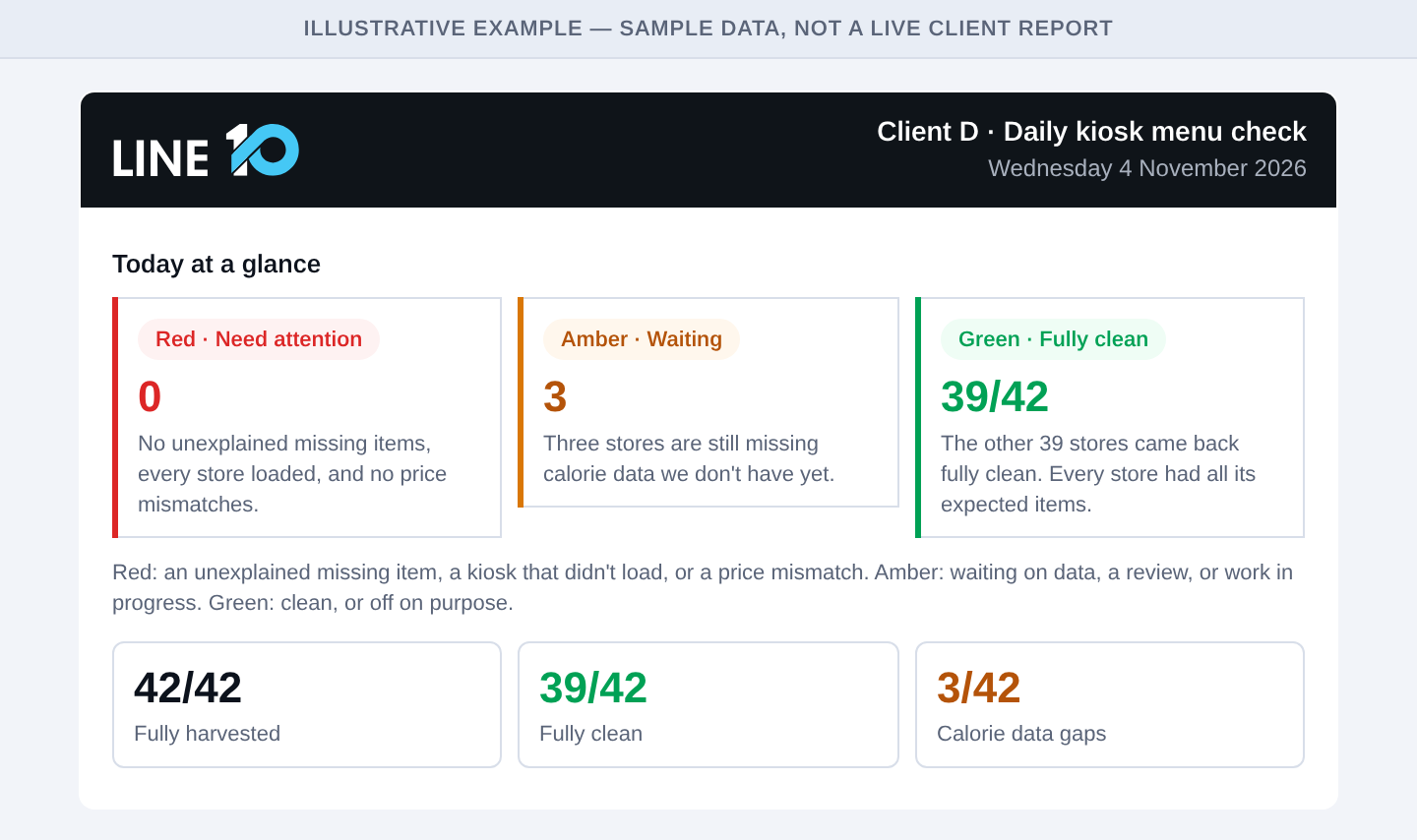
A traffic-light view of this morning's harvest
Each morning MenuTruth opens the live kiosk at every store in that day's check and harvests the menu a guest would see — not a back-office export. It looks for missing items, prices that do not match the agreed book, missing calories or allergens, options and modifiers, upsells, and whether the kiosk loaded at all. The client gets a short same-morning email: what changed since yesterday, a red / amber / green snapshot, and a clear split between actions for the brand and actions for LineTen.
The daily email the operations team can actually use
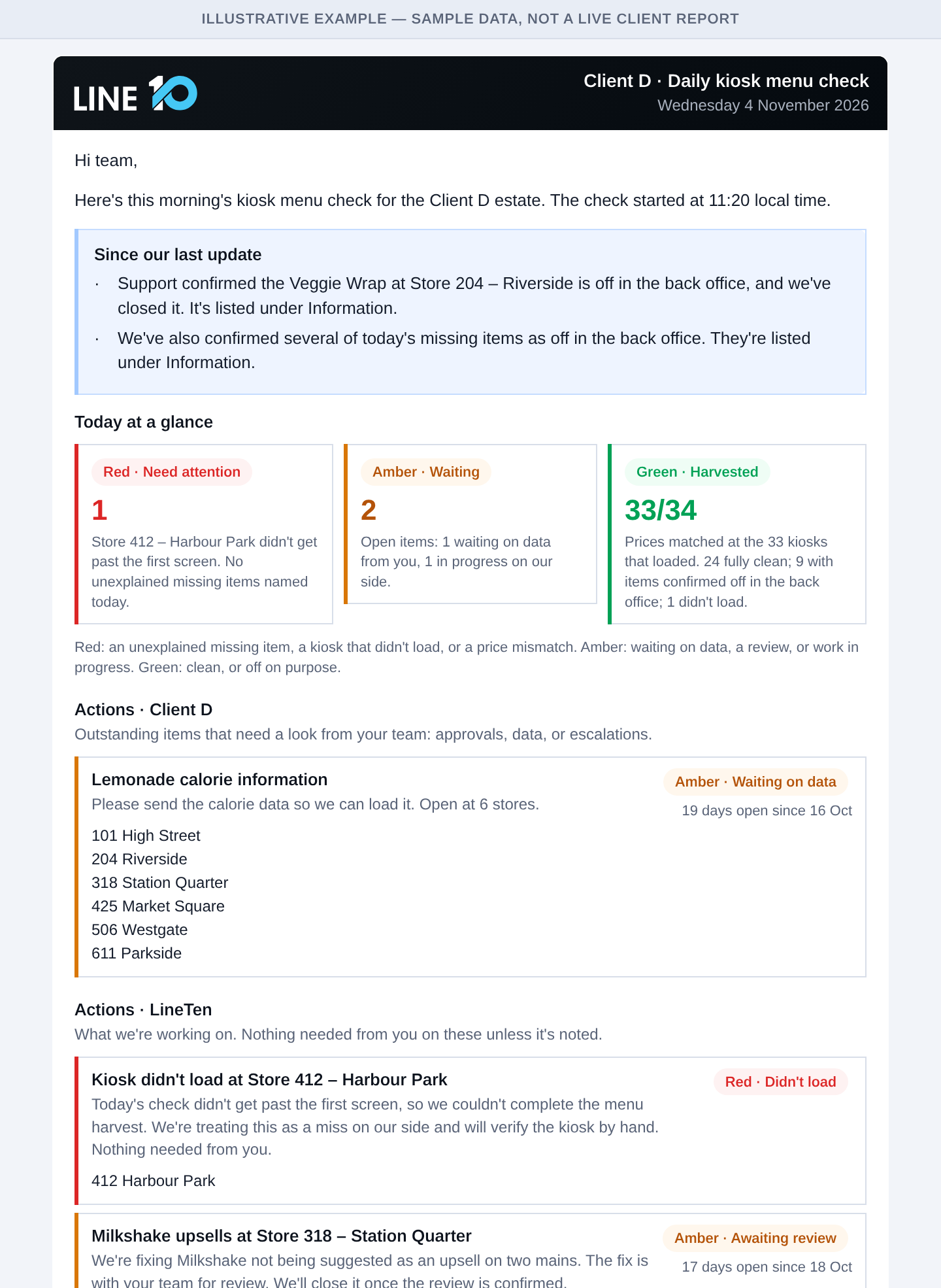
Early summaries were too long. The daily email is now short on purpose: since the last update, today at a glance, actions for the client, actions for LineTen, then an information section including what has been off this week. A flag is not automatically a break. Anything unexplained goes into a support verification loop — confirm it as intentional, correct the test, or treat it as a real fix with a date — and it stays in the issue log until it is explicitly closed.
Off on purpose is not an error
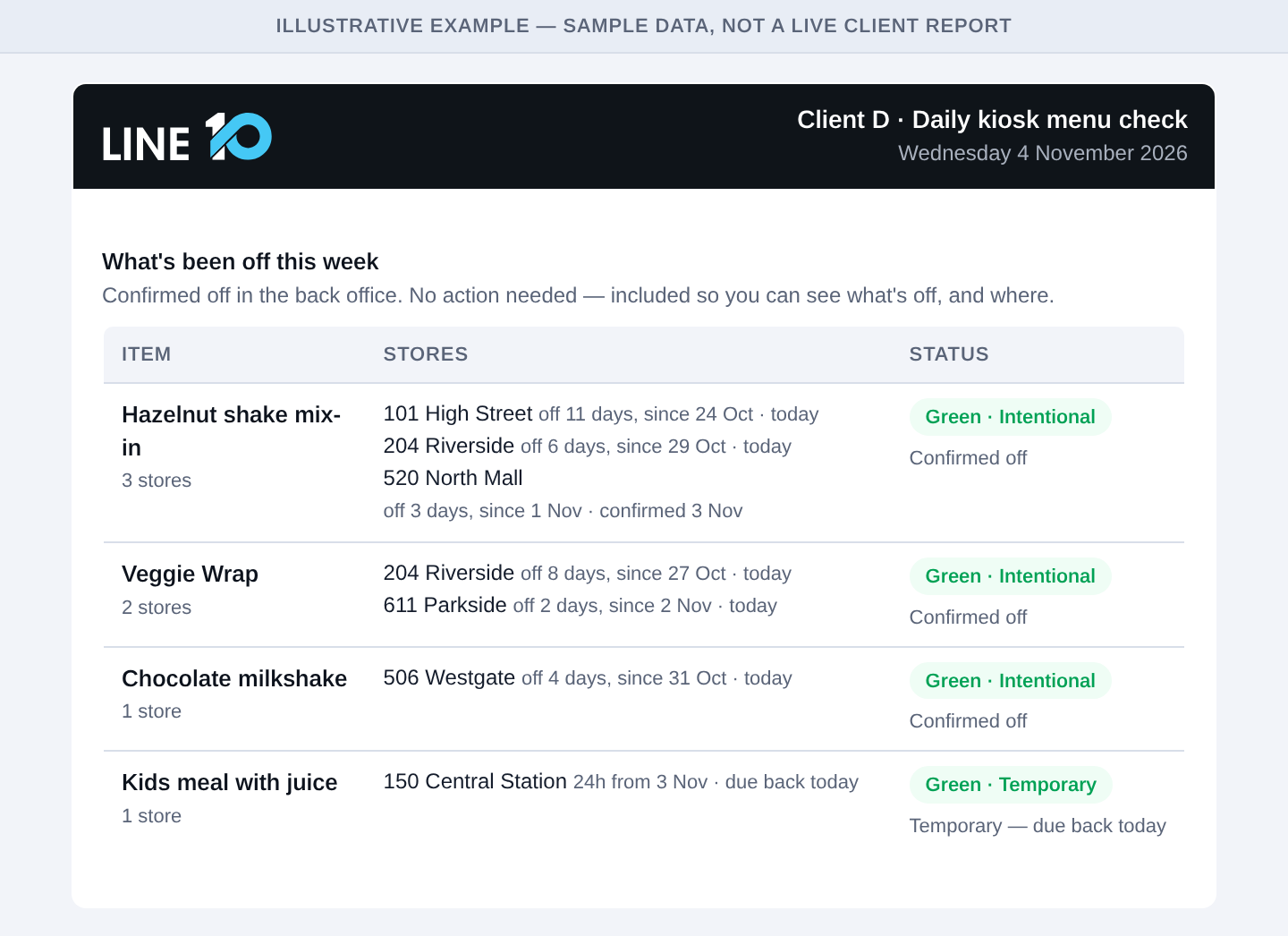
When an expected item is missing, MenuTruth is checked against the client's back-office change history. A store that has switched something off on purpose moves into an information list instead of an alarm. Of the issues logged in the period we reviewed, 86% were closed — and 75% of those closures were intentional switch-offs. That is the point of the product: it separates deliberate changes from real errors, so the brand is not asked to 'fix' a menu it meant to change.
A support loop that does not drop items
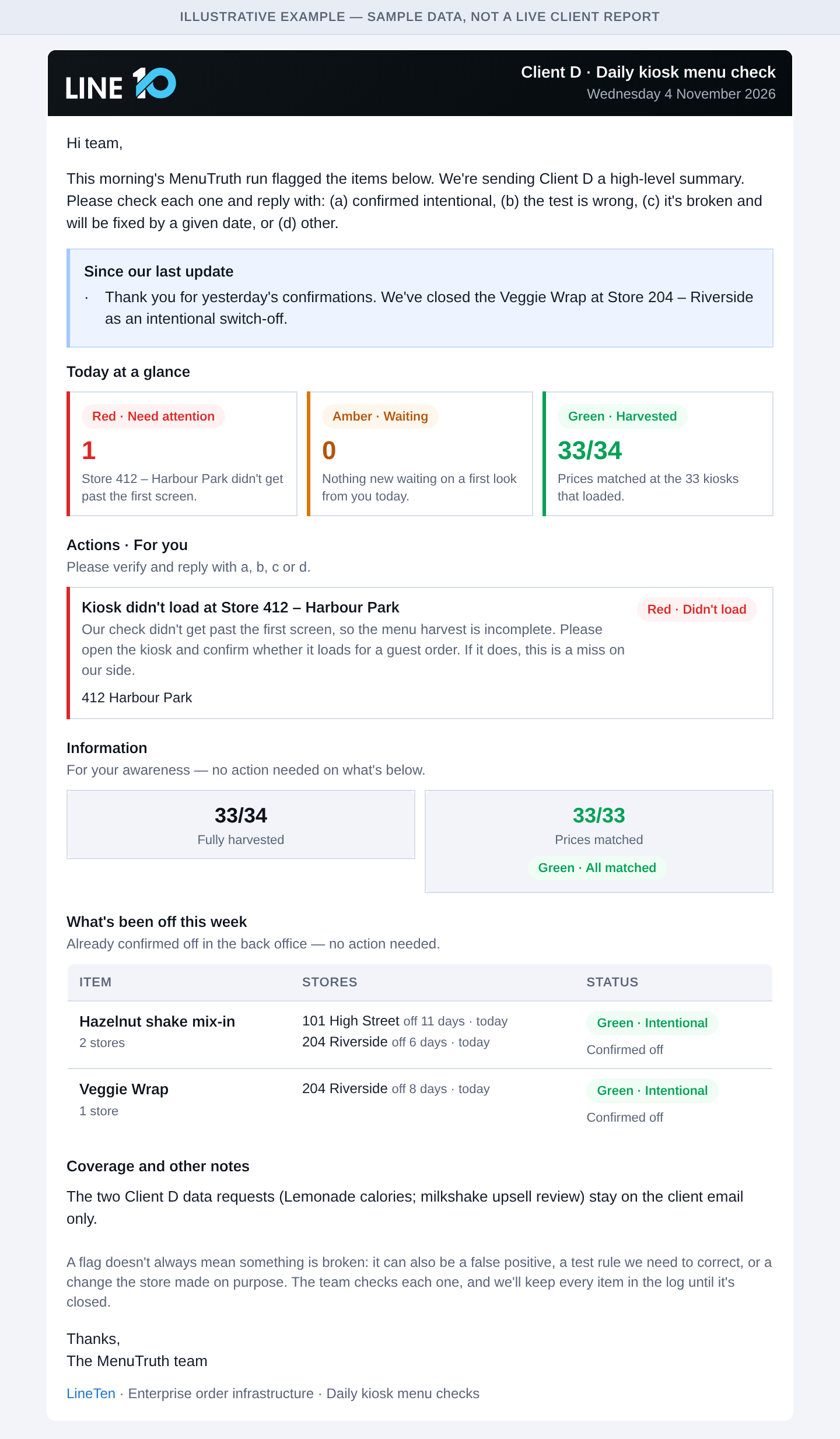
Unexplained findings are sent to LineTen support to confirm as intentional, to correct the test, or to treat as a real fix. Confirmed answers stay closed and are not re-raised unless the item later goes missing again. Each finding gets a first-seen date and an owner, and it stays open until it is closed — including items waiting on calorie or allergen data from the client. The team is not starting from a blank page every morning.
"We used to find out a kiosk was wrong when a guest was already on it. Now we know the same morning — and we can see what's off on purpose without treating it as a fire."
Every kiosk store, every day
See MenuTruth on your kiosk estate
One conversation about the menu guests actually see, every morning, before the queue starts.